Woodturning 101
A piece of wood spins on a lathe. You bring a sharp tool to it, and it comes round. Cut a little deeper and grain and color appear that nobody could see from the outside — not the person who milled the board, not the person who cut the tree.
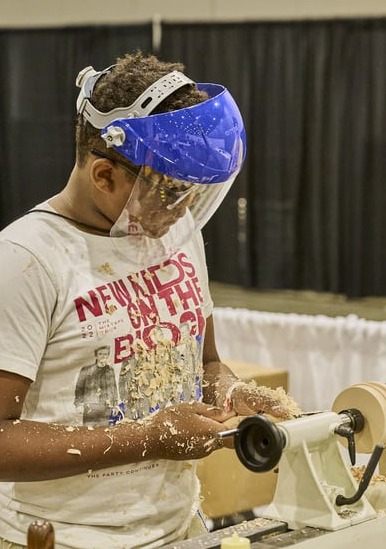
When the wood is fresh and the tool is sharp, the shavings come off in long ribbons. That takes a bit of practice. The idea takes about a minute.
Leave your first session with a spinning top, a honey dipper, or a small bowl you can actually use. Plenty of beginner projects are built to be finished in one sitting.
You don't need anything to start
No experience. No tools. No workshop. No membership.
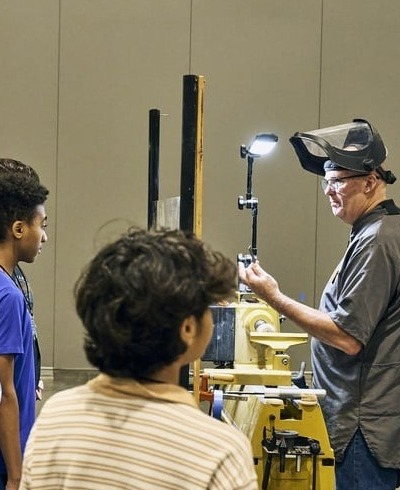
Local chapters and craft schools run sessions where the lathe, the tools, and the safety gear are all provided, and someone stands with you while you use them. Many are free or close to it. You can go once, decide it's not for you, and that's a fine outcome.
Nobody arrives knowing how to do this. Every turner you'll meet was shown by someone else, usually recently enough to remember being nervous about it.
Start here
Four short pages, in order. Ten minutes for all four.
1. What Is Woodturning
What actually happens at a lathe?
How the wood is held, why grain direction changes everything, and what people make.
2. Try Woodturning
Where can I have a go?
Chapters, craft schools, and makerspaces near you, and what a first session is actually like.
3. Safety First
What should I know first?
Mostly one thing: wear a full face shield whenever the lathe is running. Worth reading before your first session.
4. Getting Started
How do I keep going?
What to practice, what to buy later rather than now, and what to do if there's nothing near you.
What people say they like about it
Ask turners what they enjoy and the answers scatter. Some talk about making something with their hands after a week of screens. Some talk about the moment the tool opens up a piece of figured wood and the color underneath turns out to be worth keeping — from a log that was headed for the fireplace.
A lot of it ends up given away. Pens, salad bowls, ornaments, a rattle for somebody's new baby. Turned objects are unusually easy to make as gifts, and unusually well received.
Most turners, though, talk about the other turners first. Woodturning is taught in person, one pair of hands at a time, and people who learn it that way tend to pass it on the same way. Chapters meet monthly, everyone brings what they made, and the person two seats over is usually glad to explain how they did it.
Curious?
Start with What Is Woodturning, or skip ahead and find a session near you. Most people work out the appeal faster with a tool in their hand than with anything written down.